


From Division to Partnership: A Family Transformation Through Bandebereho in Rwanda
International Family Day — May 15, 2026 | Gakenke, Rwanda
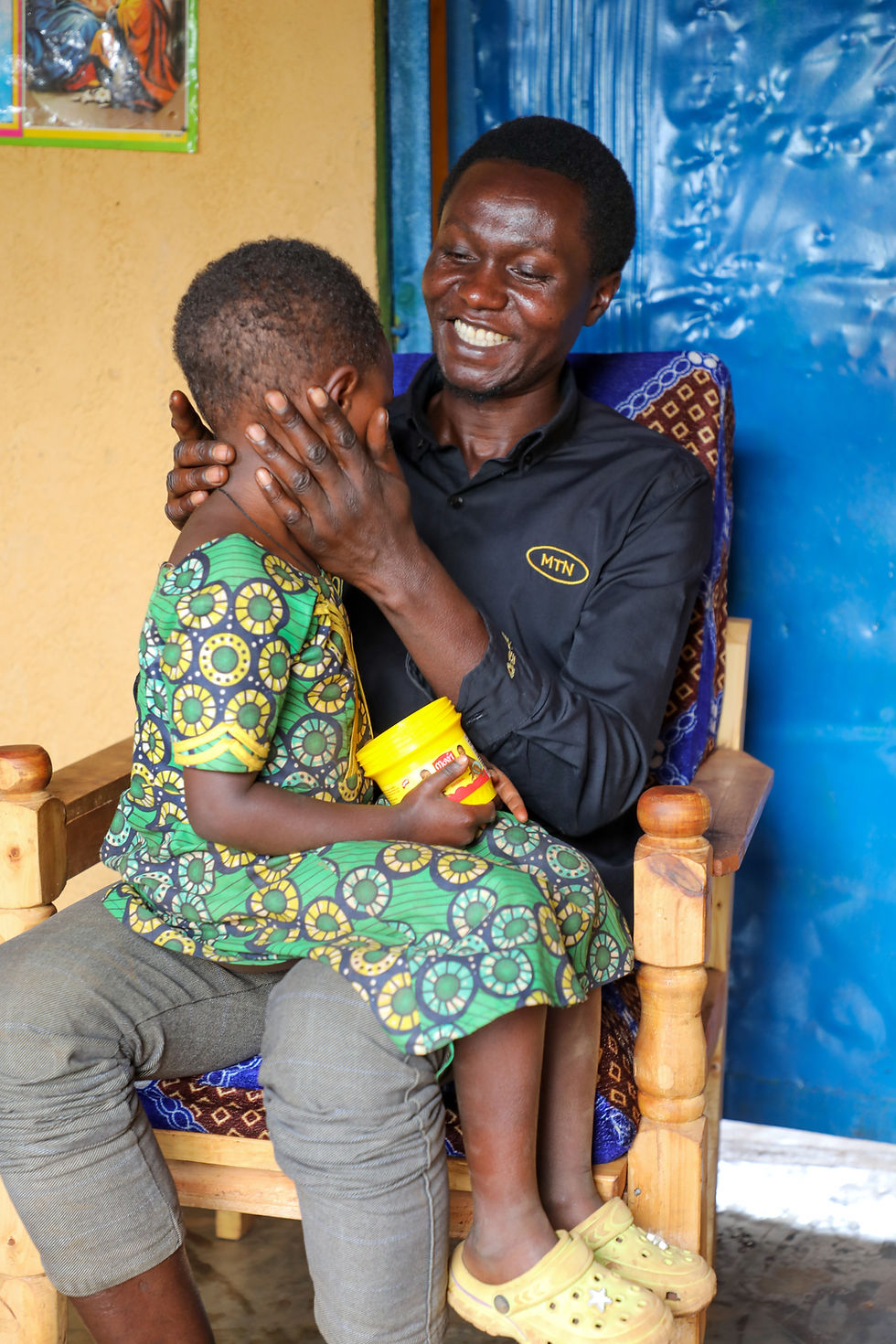
Jean de Dieu believed a man's duty ended at the field. Clarisse carried the weight of the home alone. Then came Bandebereho — and everything changed. On International Family Day, RWAMREC shares their story from Gakenke, Rwanda.
In the hills of Gakenke District, a man once believed that stepping into a kitchen would cost him his dignity. Today, he cooks willingly — and calls it love.
Every year on May 15th, the world celebrates the International Day of Families — a moment to reflect on what families need to truly thrive: safety, equality, respect, and shared responsibility. At RWAMREC, we mark this day not with slogans, but with stories. Stories of real people who had the courage to change.
This is the story of Jean de Dieu Munyabuhoro, 38, and his wife Clarisse Mujawimanzi, 32, from the Gakenke District — a couple married for nine years whose journey of transformation captures exactly why RWAMREC's work matters.
The Weight Clarisse Carried Alone
Like many couples in their community, Jean de Dieu and Clarisse began their marriage shaped by deeply embedded gender norms. He was Catholic; she was Protestant from the ADEPR church. The religious difference created friction. But it was the unspoken rules about what men do and what women do that defined — and divided — their home.
Jean de Dieu worked the fields with Clarisse. When they returned home, his work, he believed, was done.
I would sit down to eat the food she had prepared, go out to collect fodder for our livestock, and later meet other men to socialize and drink. I believed that household chores were entirely her duty — as if she were a machine.
— Jean de Dieu Munyabuhoro, Gakenke District
When he came home and found something undone, he didn't ask questions. He spoke harshly. When Clarisse told him the workload was too much, he shut her down:
Do you expect me, a man, to cook, fetch water, wash the children, or sweep the house? My job is to cultivate and find fodder for the animals. The rest is your work and that of the children.
— Jean de Dieu, recalling his former beliefs
He also feared the judgment of his neighbors. Being seen in the kitchen felt like public humiliation. "If someone saw me cooking," he admits, "they would laugh at me, saying I was a food lover, a glutton, or a big eater. If anyone found me washing a child, they would think I had been bewitched."
Meanwhile, Clarisse lived in quiet exhaustion. Her church held overnight prayer programs — gatherings central to her faith. Before leaving, she had to cook food that could last several days, prepare everything the children would need, and still carry the worry home with her into the sanctuary.
Even during prayers, my heart was never at peace because I kept worrying about home.
— Clarisse Mujawimanzi, Gakenke District
What Is Bandebereho — and Why Does It Matter?
Jean de Dieu and Clarisse's lives changed when they began attending RWAMREC's flagship program: Bandebereho.
Bandebereho means "role model" in Kinyarwanda — and that is precisely what the program sets out to create. Launched by RWAMREC in 2013, Bandebereho is Rwanda's leading gender-transformative program for couples and parents. Unlike programs that focus only on women, Bandebereho engages men as allies and change-makers. Using fatherhood as an entry point, it works with parents of young children through small group sessions led by trained community health workers. Couples explore shared caregiving, joint decision-making, non-violent communication, sexual and reproductive health, and family finances — together.
Bandebereho is not classroom theory. It is community-embedded and deeply practical. Participants go home, try what they have learned, and return to reflect. Change happens session by session, conversation by conversation.
A six-year randomized controlled trial — one of the most rigorous studies of any gender program in sub-Saharan Africa — documented lasting reductions in intimate partner violence, greater male involvement in antenatal care, improved mental health, and measurable shifts toward more equitable households. To date, Bandebereho has reached over 40,000 couples and 600,000 people across Rwanda, and is now being integrated into the country's national health system — with a goal of reaching 80,000 additional couples by 2027.
Sessions That Changed Everything
When Jean de Dieu began attending Bandebereho, something shifted. Not dramatically, not overnight. But session by session, the walls he had built around his role as a man began to crack.
"After attending the sessions, my mindset completely changed," he says. "I realized that caring for the family is a shared responsibility. Supporting my wife does not make me less of a man. It strengthens our relationship and sets a good example for our children, who will one day build their own families."
Clarisse describes how the change took shape at home:
Sometimes, after returning from the sessions, we would sit together and discuss what we had learned, then try to apply it at home. This transformation did not happen in a single day but grew gradually as we continued to attend the sessions and practice what we learned.
— Clarisse Mujawimanzi
Today, Clarisse can attend a two- or three-day church prayer program without a flicker of anxiety about what she has left behind. Because what she has left behind is a husband who shows up.
My husband now cooks, takes the children to school, fetches water, feeds the livestock, washes the clothes, and keeps the house clean. He does it willingly, and it has become part of our daily life together.
— Clarisse Mujawimanzi, Gakenke District
When the Community Pushed Back
The road was not without obstacles. Some neighbors watched Jean de Dieu's transformation with suspicion and mockery. They hadn't attended the sessions. They hadn't changed. And in communities where rigid norms are enforced collectively, a man who steps out of line becomes a target.
They mocked me, saying that I was now doing women's work and acting like a child because I attended free sessions. But when I looked at the benefits — taking better care of my family, communicating with my wife, making joint decisions, managing our money wisely instead of wasting it in bars, and feeling more love and peace at home — I knew I had made the right choice.
— Jean de Dieu Munyabuhoro, Gakenke District
Rather than retreating, Jean de Dieu became an advocate. He told his neighbors the program "brings many blessings" and encouraged them to join. He turned his own change into a catalyst for others.
Clarisse, too, faced pressure — but her anchor was the tangible progress she could see in their daily life:
Before the program, when I got money, I used to spend it however I wanted — buying clothes for myself or the children, or helping my relatives without discussing it with my husband. Now we plan together and use our money for what benefits the whole family. This has helped us make real progress, such as buying a piece of land and livestock.
— Clarisse Mujawimanzi, Gakenke District
A Family Rebuilt on Partnership
Jean de Dieu and Clarisse are not a fairy tale. They are a real couple in Kabeza Village who did the hard, unglamorous work of unlearning — of questioning what they had been taught, disagreeing with their neighbors, and choosing to show up for each other differently.
Their story illustrates what RWAMREC has always believed: men are not the problem to be worked around — they are part of the solution. When men are given the tools and the space to reflect, to question, and to step into true partnership, entire families are transformed. And when families change, communities follow.
Jean de Dieu closes with a message that deserves to echo far beyond Gakenke:
I sincerely thank RWAMREC, the community health workers, and the local leaders who have supported us throughout this journey. I wish that the Bandebereho program continues to expand so that many more couples can benefit as we did. I always encourage other men to join Bandebereho and to take an active role in caregiving — working hand in hand with their wives by cooking, cleaning, fetching water, helping the children with school, and caring for livestock for the well-being of their families.
— Jean de Dieu Munyabuhoro, Gakenke District

This International Family Day, Be the Change.
RWAMREC's Bandebereho program is transforming families across Rwanda — one conversation, one couple, one community at a time. If you believe that gender equality begins at home, and that men can be allies rather than obstacles, we invite you to learn more, share this story, and support our work.


Comments