


Bandebereho Scale-Up GTA Training Reaches 100 Community Health Workers Across Northern Rwanda
Equipping CHW supervisors, health center heads, and sanitation officers with gender-transformative skills in Burera, Gakenke, and Musanze

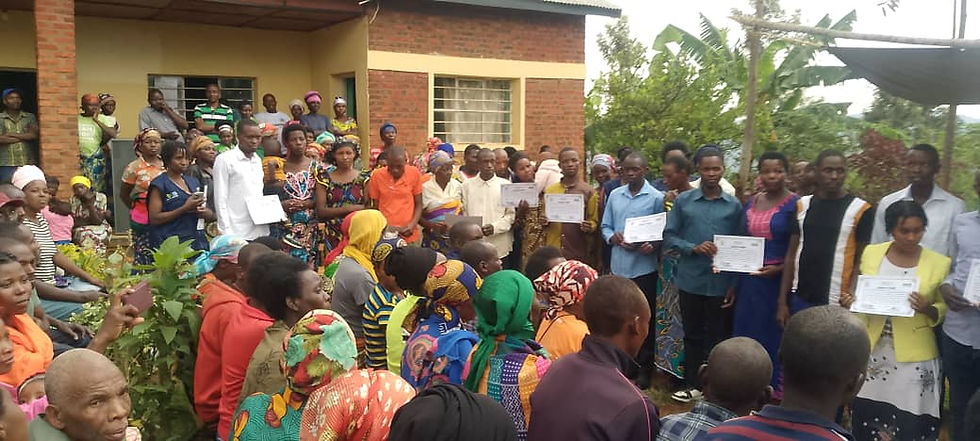
From 20 to 22 May 2026, the Rwanda Men's Resource Centre (RWAMREC) successfully conducted a three-day training on Gender Transformative Approaches (GTA) for 100 health system actors across three districts in Northern Rwanda. The training, held under the Bandebereho Scale-Up Project, targeted newly recruited Community Health Worker (CHW) supervisors, heads of health centers, and hygiene and sanitation officers at sector level in Burera, Gakenke, and Musanze Districts.
What Are Gender Transformative Approaches and Why Do They Matter?
Gender Transformative Approaches (GTA) are strategies that go beyond addressing the symptoms of gender inequality — they actively challenge and change the social norms, power dynamics, and structures that drive it. In the context of community health, GTA equips health workers to address the root causes of gender-based violence (GBV), promote healthier family relationships, and build more equitable communities.
For frontline health actors such as CHW supervisors and health center leaders, understanding GTA is essential. These individuals are often the first point of contact for families and communities facing GBV, poor health outcomes linked to gender inequality, and harmful social norms. When health workers are trained in GTA, they become powerful agents of change at the community level.
About the Training: Who Was Involved and What Was Covered?
The three-day Bandebereho Scale-Up GTA training brought together 100 participants, including:
Newly recruited Community Health Worker (CHW) supervisors
Heads of health centers
Hygiene and sanitation officers at the sector level
The training aimed to equip these key actors with the knowledge, attitudes, and skills needed to support and sustain gender-transformative programming in their communities. Participants engaged with practical tools and frameworks to integrate gender equality principles into their daily work — from home visits to community health campaigns.
A Call to Expand: Including Security Personnel in Future GTA Trainings
One of the most significant outcomes of the training was a recommendation from participants themselves. At the close of the three days, participants called for security personnel to be included in future GTA trainings, specifically:
Staff from the Rwanda Investigation Bureau (RIB)
Officers from the Rwanda National Police
Personnel from the Rwanda Defence Force (RDF)
This recommendation reflects a growing recognition that GBV response is not the responsibility of health workers alone. Security forces interact regularly with GBV survivors and perpetrators, and their ability to respond in a gender-sensitive, trauma-informed way is critical to effective community-level GBV prevention and response.
District Leadership Commends RWAMREC's Work
At the closing ceremony, the District leader delivered remarks commending RWAMREC for the relevance and quality of the Bandebereho Scale-Up programming. The leader called on all participants to actively support CHWs in their ongoing efforts to promote gender equality and healthier family relationships within their villages — a call to action that underscores the importance of multi-level commitment to gender-transformative change.
The Bandebereho Scale-Up Project: Transforming Communities Across Rwanda
This training is part of RWAMREC's broader Bandebereho Scale-Up Project, which works to engage men and boys as partners in promoting gender equality, improving maternal and child health outcomes, and reducing GBV across Rwanda. By working through existing health system structures — including CHWs and health center leadership — the project ensures that gender-transformative approaches are embedded into community health delivery at scale.
Looking Ahead
With 100 newly trained health actors now equipped with GTA knowledge and tools, RWAMREC and its partners are strengthening the foundation for a more gender-responsive health system in Northern Rwanda. The call to include security forces in future trainings signals an important next step — broadening the circle of change to ensure that every actor who interacts with vulnerable community members is equipped to do so with a gender lens.

Stay connected with RWAMREC's work: Follow us on our social media channels or visit rwamrec.org for updates on the Bandebereho Scale-Up Project and other programs.

The Bandebereho Scale-Up GTA Training reaching 100 community health workers across Northern Rwanda highlights the importance of practical training and community-based healthcare. Empowering local health workers can strengthen outreach, improve communication, and help communities access essential support more effectively. Technology can further enhance these efforts by enabling faster data processing, real-time monitoring, and smarter decision-making. This connects with edge AI implementation examples 2026, where AI can process information closer to where it is generated, supporting applications such as healthcare monitoring, smart devices, and remote community services. Combining skilled people with responsible technology can create more responsive and efficient systems.