


From Kigali to Lusaka: RWAMREC at the African Feminist Care Academy
22–26 June 2026 | Lusaka, Zambia

This week, RWAMREC is represented at the inaugural African Feminist Care Academy, a landmark five-day convening hosted in Lusaka, Zambia, by FEMNET, Akina Mama wa Afrika (AMwA), UN Women, and the International Development Research Centre (IDRC). Our Project Coordinator, Aline Umutesi, joins advocates, researchers, and Women's Rights Organisations (WROs) from across the African continent in one of the most timely feminist learning spaces to emerge in the region.
Why the Care Economy Is Central to RWAMREC's Mission
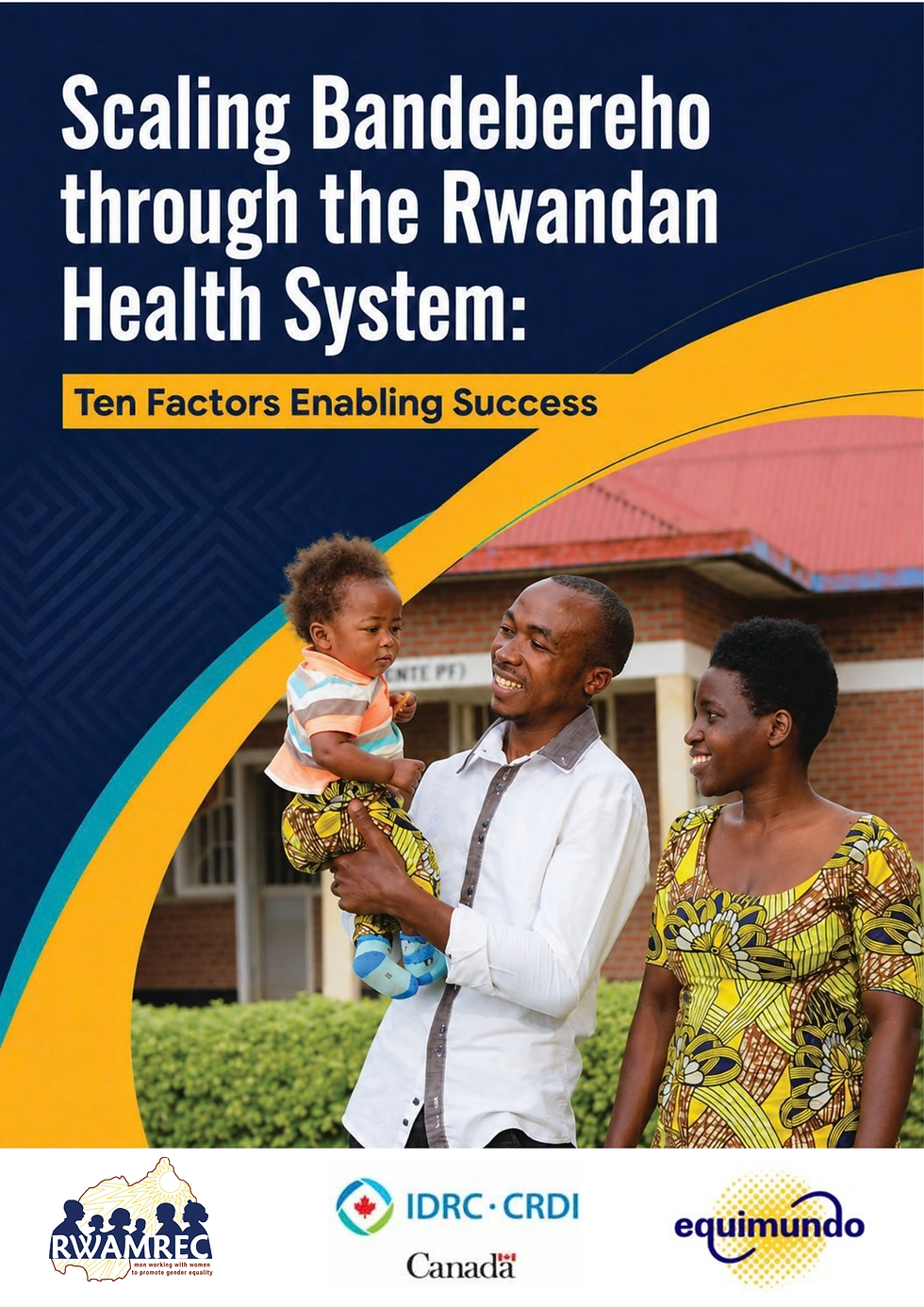
At RWAMREC, we work from a foundational conviction: that gender equality cannot be achieved without transforming the norms, structures, and relationships that govern daily life at home and in the community. For over two decades, our programmes — including BANDEBEREHO, KATAZA, and IGIRE MUGORE — have engaged men, women, and families in challenging the gendered divisions of labour that shape who does what, for whom, and at what cost.
The care economy sits at the heart of that work. In Rwanda, women spend an average of 3.7 hours per day on unpaid care work in urban areas and 3.3 hours in rural areas — compared to just one hour for men. This gap is not a private household matter. It is a structural inequality produced by decades of policy choices, social norms, and economic systems that treat women's reproductive labour as invisible, natural, and free. RWAMREC's gender-transformative approach directly challenges those assumptions by engaging men as active partners in care — not as helpers, but as equally responsible members of households and communities.
The African Feminist Care Academy deepens this analysis. By grounding care in feminist political economy, social reproduction theory, and Pan-African feminist thought, the Academy reframes care not as a welfare issue, but as a matter of public investment, democratic accountability, and economic justice.
What the Academy Offers
Spanning five days, the Academy takes participants through a rigorous and transformative learning journey:
Day One opens with feminist analysis and feminist macroeconomic frameworks — building the conceptual foundation for understanding care as a political and economic category.
Day Two reframes care through social reproduction theory, exploring how care sustains economies while remaining structurally undervalued.
Day Three turns toward feminist alternatives: what would care systems look like if designed through a Pan-African feminist lens, rooted in Ubuntu, solidarity, and collective wellbeing?
Day Four moves into advocacy strategy — equipping participants with the tools to influence national and regional care agendas.
Day Five closes with reflection and the award of certificates.
This structure reflects something RWAMREC deeply believes in: that building feminist movements requires not only emotional solidarity, but rigorous analytical capacity. Women's Rights Organisations need the language of macroeconomics just as much as the language of care — because the decisions that shape women's lives are made in finance ministries and budget frameworks, not only in households.
RWAMREC's Voice in a Pan-African Conversation
Rwanda's experience is directly relevant to the conversations unfolding in Lusaka. Our country has made significant strides in women's political representation and gender policy, yet the gendered distribution of unpaid care work remains deeply entrenched. RWAMREC's evidence base — drawn from the BANDEBEREHO randomised controlled trial and our ongoing community programmes — demonstrates that when men are meaningfully engaged in caregiving, the outcomes are transformative: reduced intimate partner violence, improved maternal and child health, and stronger family wellbeing.
This is precisely the kind of evidence the Care Academy is designed to translate into advocacy. As the concept note rightly observes, proven approaches remain fragmented and underutilised — not for lack of solutions, but because the connection between evidence and decision-making is too often broken. RWAMREC's participation at this Academy reflects our commitment to ensuring that Rwandan and East African voices contribute to the Pan-African policy agenda on care.
A Note from Aline Umutesi
Care is the invisible foundation that sustains our economies and societies. Transformative change begins when we stop treating care as an individual burden and recognise it as a collective responsibility shared by the state, communities, markets, and households.

Looking Ahead
RWAMREC returns from Lusaka not only with strengthened analytical frameworks, but with expanded networks across the African feminist care ecosystem. We will be integrating the insights from this Academy into our ongoing advocacy, programme design, and communications — bringing a sharper care economy lens to how we tell stories, build partnerships, and engage policymakers.
Care is not women's work. It is everyone's responsibility — and it is a public good that demands public investment. That is the message we carry from Kigali to Lusaka, and back again.

The African Feminist Care Academy (22–26 June 2026) is convened by FEMNET, Akina Mama wa Afrika (AMwA), UN Women, and IDRC/Canada. RWAMREC participated through Project Coordinator Aline Umutesi.
Learn more about RWAMREC's gender-transformative programmes at www.rwamrec.org


Comments