


From Belief to Change: My Journey as a Businesswoman and Leader
Through the RWAMREC–GIZ project Engaging Men for Gender Equality in the Private Sector, I was given the opportunity to reflect deeply on my beliefs, my leadership, and the way gender norms shape both workplaces and families. This journey transformed not only my business, but also my way of thinking and living.
My name is Ruth. I am a mother of two girls and the manager of a bakery factory that I established in 2022. When I started this business, I believed that women were not capable of working in factory environments—especially in roles that require physical strength, such as lifting heavy materials or operating machinery. Because of this belief, I mainly relied on male workers and employed only two women, without fully trusting their abilities.

Everything began to change after I participated in the gender equality and positive masculinity trainings offered through RWAMREC. Through these trainings, I came to understand that ability is not determined by gender, but by opportunity, skills, and the confidence one is given. When women are provided with equal opportunities, they prove that they can perform just as well as men.
Following the trainings, I began offering women the same opportunities as men in the factory. What I witnessed surprised me—in the best way. Women and men performed equally well, producing high-quality work side by side. Today, our factory is a space where women and men work together without discrimination. We communicate openly, plan together, and collaborate to overcome challenges related to both work and daily life.
One of the most important changes we introduced was the creation of a mother’s room for employees with young children. This space allows mothers to leave their babies in a safe and caring environment, rest when needed, and return to work with peace of mind. Because of this, women no longer have to stop working due to childbirth—they continue contributing to the growth of the factory.
The trainings also transformed my understanding of gender-based violence, particularly verbal and sexual harassment. I realized that many behaviors we had normalized were, in fact, forms of GBV. Becoming aware of this helped us change our mindset and build a safe and respectful working environment for everyone.
Today, our factory has a Gender Committee that helps prevent and address cases of GBV and discrimination, including unwanted physical contact, degrading language, abuse of power, and other harmful behaviors. GBV awareness posters are displayed throughout the factory to educate workers about different forms of harassment and their consequences.
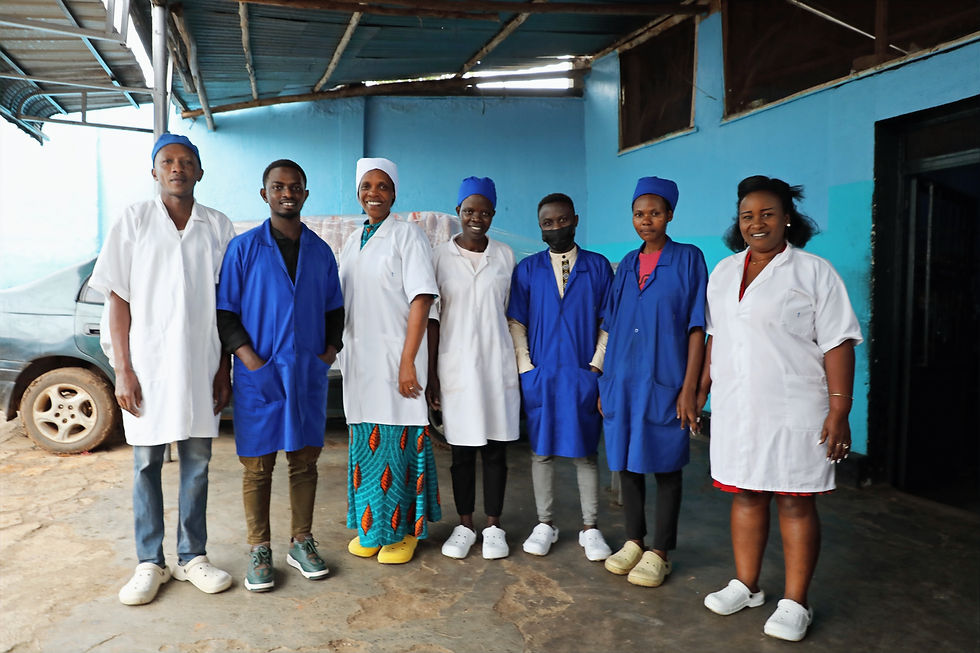
Before the trainings, women were excluded from certain tasks due to harmful cultural beliefs. One common myth claimed that if a woman looked into the oven, the bread would not rise. Through learning and reflection, we understood that this belief had no factual basis. Today, women operate machines and technical equipment confidently and competently, just like their male colleagues.

The change did not stop at the workplace—it also reached my home. Before, my husband and I worked independently and rarely discussed our work, challenges, or goals. After attending couples’ trainings, we began sitting together, planning jointly, and supporting each other both at home and at work. We now share household responsibilities, make decisions together, and raise our children with the understanding that all children, regardless of gender, deserve equal opportunities.
These transformations strengthened my confidence as a leader and improved collaboration, respect, and productivity in the workplace. They also brought unity and growth to my family.
My message to other women is simple: do not be afraid to start a business. Start small, remain committed, keep learning, and be patient. I also started with very little—and today, I see the results.
This journey was made possible through the RWAMREC–GIZ project Engaging Men for Gender Equality in the Private Sector, which equipped me with the knowledge and tools to challenge harmful gender norms and build a more inclusive and productive workplace.

Today, at the project’s final celebration event, I was honored to receive an award for the gender-transformative initiatives I implemented in my company—recognized in front of other private companies, RWAMREC, GIZ, and MIGEPROF. This recognition reaffirmed that change is possible, meaningful, and worth sustaining.


Comments